

- Joined
- Jan 21, 2002
- Messages
- 3,834
One more review for you guys:

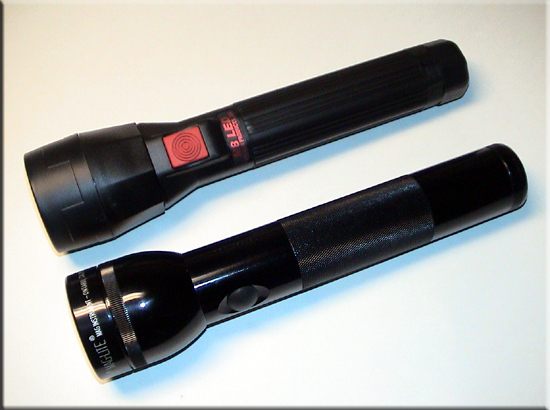
Available in black and yellow, the Pelican M8 LED uses Pelicans new Recoil Technology which, according to Pelican, allows 100% of the light from the 1 watt LED to be captured, focused and reflected by the reflector. The above picture shows the Pelican M8 LED next to a 2D Maglite.
----------------------------
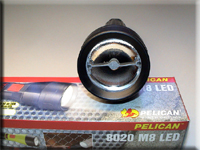
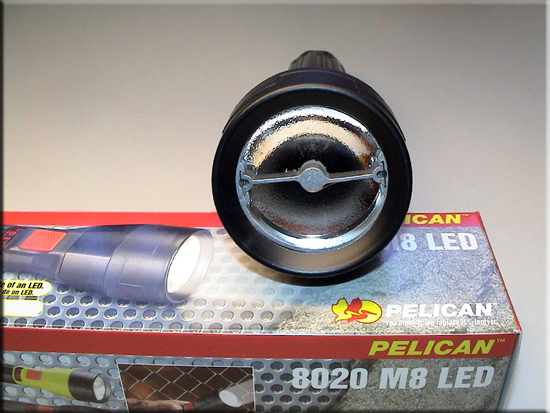
Looking at the light from the front, you see the aluminum bridge across the reflector that holds the LED.
----------------------------
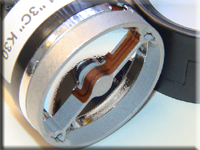
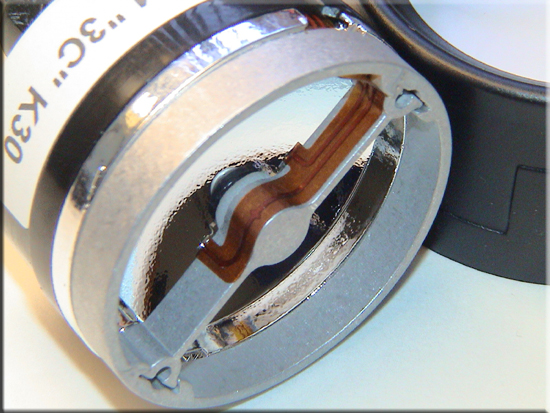
In this picture you can see the LED mounted on the bridge and facing the reflector. The copper ribbon on the bridge holds the wiring to the LED. The bridge was made from aluminum to help dissipate heat generated from the LED.
----------------------------
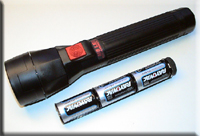
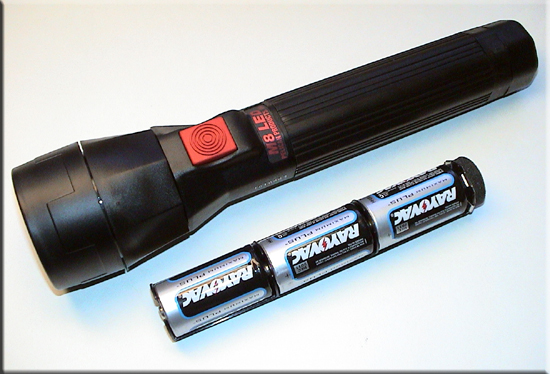
The M8 runs on 3 alkaline C batteries. The C batteries are placed in a plastic tray and inserted into the light through the tailcap end of the flashlight.
----------------------------

The M8 creates a very tight, square/diamond shaped hotspot with very little side spill. In the picture above, the M8s beam (left) is compared with that of a Maglite 3D on its tightest focus (I didnt have a 3C). Pelican rates the M8 at 30 lumens with a 6 hour burn time. The beam is very white and throws very far. While it doesnt out throw the Maglite, its reach is considerable considering that it is a 1 watt LED.
----------------------------
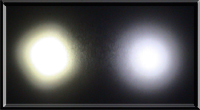
In the picture below you see a comparison between the M8 LED (left) and the M6 LED. The M6 LED beam was whiter than that of the M8, but you wouldnt notice unless you were comparing the two next to each other.
----------------------------
The M8 body appears to be very durable and well made with Pelicans lifetime guarantee. You will not have to change the lamp assembly and it runs on fairly inexpensive batteries. Pelican describes this light as water resistant but I have yet to test that part out yet. Writing on the body of the flashlight does indicate that it is listed for use in hazardous areas if you require it. It utilizes a soft, red clickie switch to activate the beam. The switch is on the body, similar to where a Maglite has its switch and is quite reactive (I.e. it has a noticeable click). The lack of side spill does take some getting used to and some may find this to be disconcerting. It is a matter of personal preference, but the lack of spill has not yet caused a problem for me, but I have only owned the light for a short time. Im not sure of the MSRP for the M8, but it is available on the Internet for under $60 which is a great price for a very well made light. For those of you who are interested in purchasing the M8 LED, you may want to wait until the release of the Pelican SabreLite LED which is a waterproof LED light that also runs on 3 C batteries and uses the new Recoil Technology. Pelican advertises it as the first submersible Recoil LED Technology light.
Thanks for reading.
Available in black and yellow, the Pelican M8 LED uses Pelicans new Recoil Technology which, according to Pelican, allows 100% of the light from the 1 watt LED to be captured, focused and reflected by the reflector. The above picture shows the Pelican M8 LED next to a 2D Maglite.
----------------------------
Looking at the light from the front, you see the aluminum bridge across the reflector that holds the LED.
----------------------------
In this picture you can see the LED mounted on the bridge and facing the reflector. The copper ribbon on the bridge holds the wiring to the LED. The bridge was made from aluminum to help dissipate heat generated from the LED.
----------------------------
The M8 runs on 3 alkaline C batteries. The C batteries are placed in a plastic tray and inserted into the light through the tailcap end of the flashlight.
----------------------------
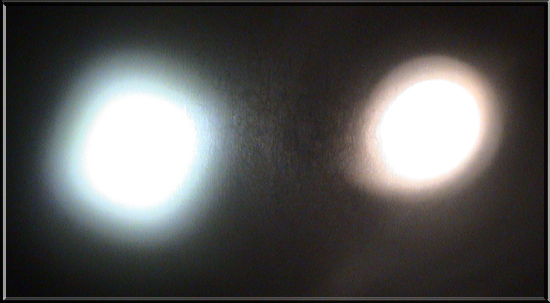
The M8 creates a very tight, square/diamond shaped hotspot with very little side spill. In the picture above, the M8s beam (left) is compared with that of a Maglite 3D on its tightest focus (I didnt have a 3C). Pelican rates the M8 at 30 lumens with a 6 hour burn time. The beam is very white and throws very far. While it doesnt out throw the Maglite, its reach is considerable considering that it is a 1 watt LED.
----------------------------
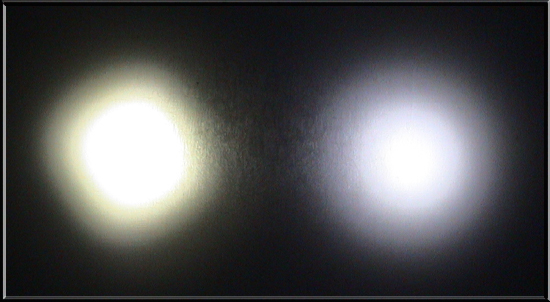
In the picture below you see a comparison between the M8 LED (left) and the M6 LED. The M6 LED beam was whiter than that of the M8, but you wouldnt notice unless you were comparing the two next to each other.
----------------------------
The M8 body appears to be very durable and well made with Pelicans lifetime guarantee. You will not have to change the lamp assembly and it runs on fairly inexpensive batteries. Pelican describes this light as water resistant but I have yet to test that part out yet. Writing on the body of the flashlight does indicate that it is listed for use in hazardous areas if you require it. It utilizes a soft, red clickie switch to activate the beam. The switch is on the body, similar to where a Maglite has its switch and is quite reactive (I.e. it has a noticeable click). The lack of side spill does take some getting used to and some may find this to be disconcerting. It is a matter of personal preference, but the lack of spill has not yet caused a problem for me, but I have only owned the light for a short time. Im not sure of the MSRP for the M8, but it is available on the Internet for under $60 which is a great price for a very well made light. For those of you who are interested in purchasing the M8 LED, you may want to wait until the release of the Pelican SabreLite LED which is a waterproof LED light that also runs on 3 C batteries and uses the new Recoil Technology. Pelican advertises it as the first submersible Recoil LED Technology light.
Thanks for reading.

