What Books Are You Reading Right Now?

I don't think there's a book thread going, if I may be so bold as to start one..

Trying to get back into reading more books lately, just picked this up the other day and so far it's good.

ri4wcAA.jpg
Level Zero Heroes, Michael Golembesky
 
I recently finished the second book in the three book "Enemies" series by Matthew Bracken. Probably start the third one before the end of the month.
 
Nickled and Dimed, rereading it after about the 3rd time.

Great book, about a middle-upper class trying to live and report on being low-income. Highly recommend it!
 
Echoes of Harbin by John Baxter King. Mystery/Crime novel with an interesting throwback to WW2 and Japanese/Russian involvement in Manchuria.
 
Recently finished:

1) Watch My Back, by Geoff Thompson.

2) Everybody Had An Ocean: Music and mayhem in 1960s Los Angeles, by William McKeen.

Currently reading:

1) Bowie Knife Fights, Fighters, And Fighting Techniques, by Paul Kirchner.

2) Notes From A Factory Floor: How I got from there to here, by Geoff Thompson.

Jim
 
I've read a few interesting books since my last post. Foremost in my mind is "A Woman of No Importance" by Sonia Purnell. It's the biography of American spy Virginia Hall during WWII.

I'm somewhat a fan of David Roberts, if you live in the West you may appreciate his works. I've read these over the last six months: "A Newer World: Kit Carson John C Fremont and the Claiming of the West", "Escalante's Dream", "The Bears Ears" and "Finding Everett Ruess". Roberts has written books on climbing and adventuring which I haven't read, more interested in his later books on the Southwest.

Living in Utah it's almost mandatory that you read some of Edward Abbey. Years ago I read "Desert Solitaire" and "The Monkey Wrench Gang". I'm about to finish "Hayduke Lives", a sequel to the MWG, Abbey sure entertains, now having lived in Utah for 16 years I really appreciate him.
 
I am re-reading Cormac McCarthy’s Blood Meridian for the third or fourth time. I just finished Knockemstiff by Donald Ray Pollock and will probably re-read The Devil All The Time by Pollock after or Child of God by McCarthy again.
 
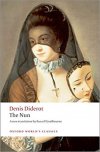
Denis Diderot's The Nun.

The_Nun.jpg

And we went our separate ways, she to go and grieve in her cell, I to go and ponder in mine on how strange women's minds are. Such is the effect of cutting oneself off from society. Man is born to live in society. Separate him, isolate him, and his way of thinking will become incoherent, his character will change, a thousand foolish fancies will spring up in his heart, bizarre ideas will take root in his mind like brambles in the wilderness. Put a man in a forest and he will become wild; put him in a cloister, where the idea of coercion joins forces with that of servitude, and it is even worse. You can leave a forest, but you can never leave a cloister; you are free in the forest, but you are a slave in the cloister. It perhaps takes even more strength of character to withstand solitude than it does poverty. A life of poverty is degrading; a life cut off from society is depraving.

Of course there is a movie — more than one, in fact — and one you can watch for free, with beautiful Anna Karina. But in these cases, my choice is to read the book first.

 
Last edited:
Crucible of War by Fred Anderson. The seven years war and the fate of empire in British North America.
 
Books I've read recently:

Tribes - Sebastian Junger
Klara and the Sun - Kazuo Ishiguro
Desert Oracle - Ken Layne

Reading now: Trinity - The Best Kept Secret - Vallee/Harris
 
Haven't read much of anything lately but can share books that I had spent some time with, some books reading them completely and others only lightly not in their entirety ~ I once or twice picked up a copy of Henry George's {Progress and Poverty} seemed proper for the times and questions that everyone has seemed to always be concerned with ~

Henry George’s Progress and Poverty (1879) investigates a paradox that still feels contemporary: why does technological and economic progress so often coincide with deepening poverty? George argues that the root cause lies in how societies treat land and economic rent, and he proposes a bold remedy to correct this imbalance.

📘 Core Idea

  • George observes that industrial progress increases overall wealth, yet workers’ wages stagnate and inequality widens.
  • He concludes that the problem isn’t technology or labor—it’s the private capture of land value, which rises as communities grow.
  • His central proposal is a “single tax” on land values, meant to reduce inequality and prevent unearned wealth accumulation.
🔍 Key Themes
1. The Paradox of Progress

  • Economic growth and innovation should lift everyone, but instead they often enrich landowners disproportionately.
  • Poverty persists not because of scarcity, but because of structural imbalances in how societies distribute the benefits of growth.
2. Land, Rent, and Inequality
  • Land is finite; as demand rises, so does rent.
  • George argues that rising land values siphon wealth away from workers and entrepreneurs, creating depressions and cycles of boom and bust.
3. The Single Tax Remedy
  • George proposes taxing land value (not buildings or improvements).
    • Discourage speculation
    • Reduce inequality
    • Fund public needs without penalizing labor or production
🏛️ Influence and Legacy
  • The book became one of the best-selling economic works of the 19th century and shaped progressive, populist, and urban reform movements.
  • Its ideas influenced city planning, anti-monopoly movements, and modern discussions of universal basic income and land value taxation.
📚 In Short
Progress and Poverty is a passionate, accessible critique of economic injustice—and a call to rethink how societies share the wealth they collectively create.

If you want, I can also break down specific chapters, explain the “single tax” in plain language, or compare George’s ideas to modern economists.
 
Last edited:
Back
Top